Weather along the Wasatch Front keeps you guessing. One day it’s blinding sun with high UV at elevation; the next it’s sideways snow, spring rain, or gritty canyon winds. If your home or storefront in Salt Lake City could talk, it would probably say, “Hey, I could use a tougher shell.” That’s where Vinyl Siding earns its keep. It’s light, tough, surprisingly good-looking, and built to handle the kind of temperature swings Utah throws at us. Let me explain why it’s a smart, weather-ready choice—whether you own a classic bungalow in Sugar House or manage a retail spot in South Salt Lake.
Salt Lake weather is no joke—here’s what your siding faces
We get a mix. High-desert heat in July. Freeze-thaw cycles that test every seam. Occasional hail. Dust, sun, and gusts that roll off the canyons without warning. And because we sit at altitude, UV intensity is higher than at sea level. That means color fade can be a real thing, and lesser materials show it fast.
Good siding for weather-resistant homes in Salt Lake City needs to resist moisture, handle thermal expansion and contraction, stand firm in the wind, and shrug off sun. That’s a tall order. Yet it’s exactly the environment where modern vinyl siding thrives.
So, why vinyl siding? Short answer: it’s tough, light, and low-fuss
Vinyl has changed a lot over the years. Today’s products use color-through technology, UV inhibitors, and strong locking profiles. The result: panels that don’t need paint, resist chips, and keep their color longer. And because the material itself is light, it puts less strain on your walls and your budget.
You know what? People often assume “budget-friendly” means “basic.” Not here. With high-definition woodgrain textures, clean modern lines, and profiles like board-and-batten, clapboard, and shake, vinyl siding can look classic, coastal, or crisp—your call.
Built for our highs, lows, and surprise storms
Temperature swings
Hot afternoon, cold night—repeat. Vinyl flexes with those shifts without cracking when it’s installed the right way. That means panels are hung, not nailed tight, to allow movement. It sounds small, but it’s a big deal for long-term performance.
UV exposure
Salt Lake’s sun is no slouch. Quality vinyl from brands like CertainTeed, Mastic, and Norandex uses capstock layers and fade-resistant pigments to keep colors truer, longer. No more repainting every few years.
Wind and hail
Properly rated vinyl siding can handle strong winds—many lines are tested well beyond typical Front Range gusts. Hail? It happens. Thicker panels and insulated options boost impact resistance. Is anything hail-proof? Not honestly. But modern vinyl performs better than most would think, and it won’t rust or rot after a storm.
Moisture management: the unglamorous hero
Water is sneaky. The trick isn’t just blocking it—it’s managing it. A solid vinyl siding system includes quality housewrap, flashing at every opening, and a built-in drainage plane or rainscreen so moisture can move out and walls can dry. That’s what keeps mold and rot from taking hold.
Our crews at Utah Siding & Exteriors follow VSI (Vinyl Siding Institute) guidelines for spacing, fastening, and detailing. Those little technical steps—like leaving a hairline gap at trim or using the right J-channel—pay off every winter and spring when melt meets wind-driven rain.
Energy savings without the fuss
Insulated vinyl siding adds continuous insulation, which helps reduce thermal bridging (that’s where studs pull heat right through your walls). You feel the difference during a January inversion when the air is bitter and still. Insulated panels can add an R-value bump—often around R-2 to R-4—without changing the look of your home.
Here’s the thing: you’ll still want good attic insulation and sealed windows. Siding isn’t a silver bullet. But it’s a helpful layer that works quietly in the background, trimming energy use and softening outside noise.
| Siding Type | Weather Performance | Maintenance |
|---|---|---|
| Vinyl (Insulated or Standard) | Excellent in freeze-thaw; strong UV resistance; wind-rated | Low—no repainting; simple wash |
| Fiber Cement | Very durable; heavy; paint can fade over time | Moderate—caulking and repainting over time |
| Wood | Classic look; vulnerable to moisture and pests | High—regular staining or painting |
Looks that last: colors, textures, curb appeal
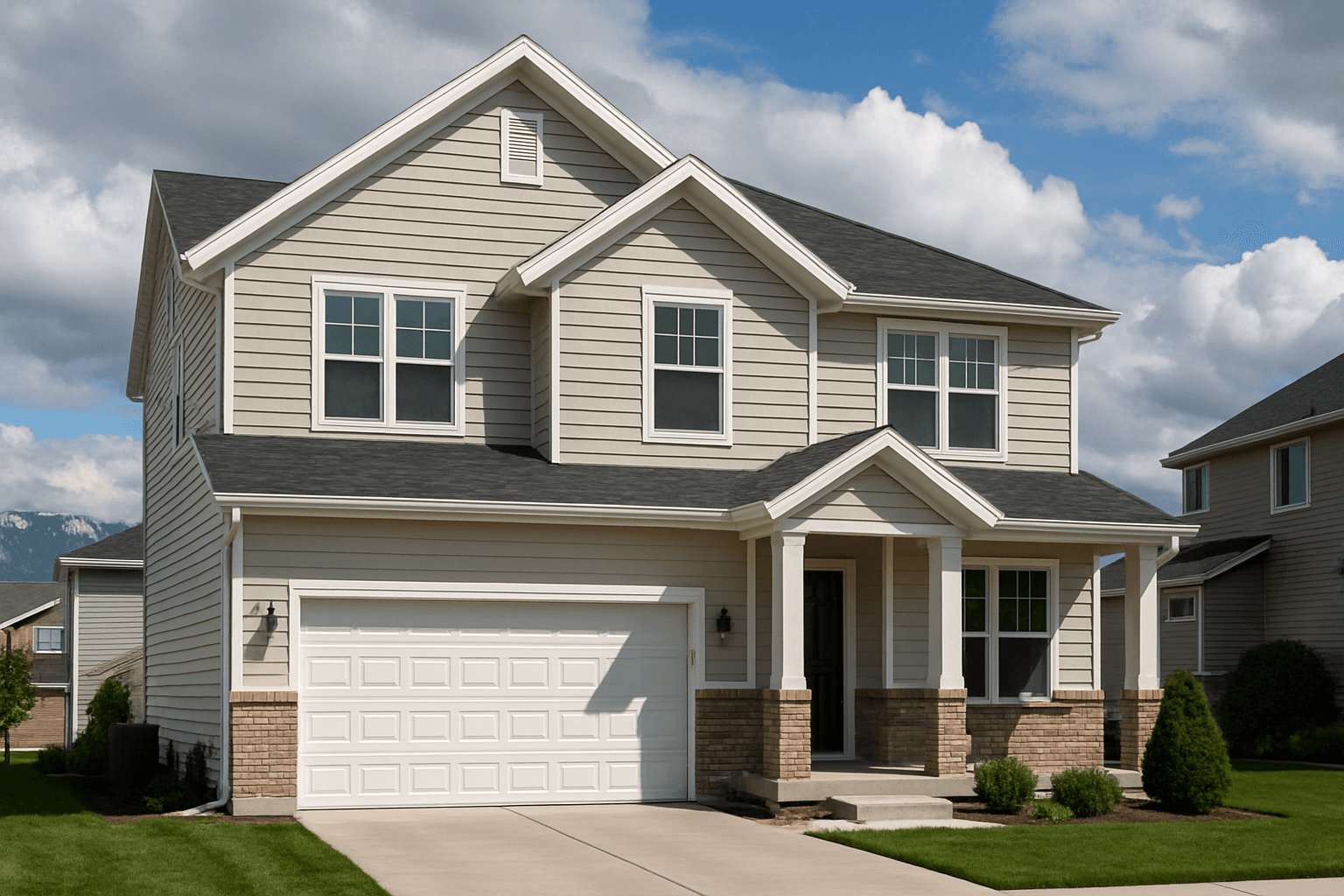
Want a modern charcoal with crisp white trim? A warm, mountain-lodge cedar tone without the upkeep? Or a coastal blue that holds its pop? Today’s vinyl siding colors come in rich palettes with realistic grains and matte finishes that cut glare. It’s subtle but it matters—especially in bright Utah light.
For homes, board-and-batten vertical siding adds farmhouse charm; Dutch lap suits mid-century streets; shakes on gables frame the roofline beautifully. For businesses, horizontal profiles create a clean, branded face, and accent panels can highlight entries and signage. Honestly, the design flexibility is slept on.
Maintenance: minutes, not weekends
Paint cans and ladders? Pass. Most homeowners wash vinyl once or twice a year with a garden hose and a soft brush. Mild soap works on smudges. No sanding. No scraping. For commercial properties and HOAs, that means predictable upkeep and fewer emergency calls.
And because the color runs through the panel, small scratches are far less obvious than on painted surfaces. That’s a win for rental turnovers and storefronts with foot traffic.
Cost that makes sense now and later
Vinyl’s up-front cost is friendly. But the long game is where it really shines. There’s no scheduled repainting, minimal repair cost, and strong warranties. Over ten to fifteen years, that adds up. Compare it to wood that needs regular finish work or fiber cement that eventually needs paint refresh—vinyl keeps looking good with far less effort.
And if you ever sell, the clean, low-maintenance appeal is a selling point people in Salt Lake City recognize. We hear it from agents all the time: “A tidy exterior shows the home was cared for.”
For businesses and multi-family: durable looks without the drama
Property managers, retail owners, and HOA boards need two things: curb appeal and predictability. Vinyl siding helps on both fronts. It’s light on structure, fast to install, easy to clean, and easy to match if a panel needs replacement after a sign change or a utility upgrade.
We’ve completed everything from townhouse refreshes in West Jordan to small office façades near downtown. Mixed-use buildings can pair horizontal vinyl on upper stories with masonry at street level for a polished, durable look.
Common myths, cleared up
“Vinyl looks plastic.” Old school stuff sometimes did. Today’s better lines have deep woodgrain, beveled edges, and matte finishes that mimic painted wood—minus the peeling.
“It’ll warp in the heat.” With proper installation and quality panels, no. Vinyl is designed to move with temperature. Heat from a barbecue placed too close can cause damage—same goes for any siding. Keep grills a safe distance, and you’re golden.
“It fades fast.” UV blockers and color-through tech drastically slow fade. Darker tones have improved a lot too, with many manufacturers offering fade warranties.
“It’s a fire hazard.” Vinyl won’t ignite easily and is self-extinguishing once the flame source is removed. Like any cladding, it needs to be used with code-compliant materials around heat sources. We follow local code to a T.
“It’s not eco-friendly.” There’s nuance here. Vinyl manufacturing has modernized, and many products are recyclable at end of life. Because you don’t repaint, you reduce solvent use over decades. It’s a practical, low-waste choice when installed and vented correctly.
Why Utah Siding & Exteriors?
We’re locals who know our microclimates—the lake effect, the canyon winds, the powder that sneaks behind trim if you let it. We install top brands like CertainTeed, Mastic, Norandex, and ProVia, and we guide you on profiles and colors that make sense for your block, your HOA, and your brand.
You’ll get a clean, code-compliant install, VSI-informed details, and warranties explained in plain terms. We photograph every stage, so you can see the flashing, housewrap, and fasteners before the panels go on. It’s your building—you deserve that clarity.
What a typical project looks like
- Walkthrough and goals. We listen for what bugs you—drafts, peeling paint, faded color—and what look you’re after.
- Design and estimate. Samples, color pairings, and a clear quote. No mystery line items.
- Prep and protection. We protect landscaping, remove old cladding as needed, inspect sheathing, and fix what needs fixing.
- Weatherproofing first. Housewrap, flashing, and ventilation paths are set before any panel goes up.
- Installation. Panels are hung with the right spacing; trim is tight and tidy; details are clean around windows and doors.
- Cleanup and walkthrough. We tidy the site and check every elevation with you—no surprises.
For commercial sites, we coordinate with your schedule to keep things moving. Early starts, weekend staging, and multi-entrance planning help you stay open.
Seasonal timing: when should you schedule siding in Salt Lake?
Spring and early fall are popular—mild temps and stable weather. But we install year-round when conditions allow. Cold-weather techniques, proper fasteners, and careful handling keep panels happy when it’s brisk. If you’re eying a color change for summer, winter planning means you’re first on the spring calendar. Little bonus: manufacturers sometimes run off-season promos, and we’ll pass those savings along when they’re available.
A quick note on style and neighbors
We get it—some streets have a vibe. You want your place to fit in without disappearing. We’ll help you choose profiles and trim that feel right for the block. Think classic lines for Liberty Wells bungalows or sharper contrasts for newer builds in Daybreak. For HOAs, we’ll provide samples and color specs for smooth approvals. It sounds small, but it saves time and headaches.
Ready to weatherproof your place—without overcomplicating it?
If you want a weather-resistant, great-looking exterior that doesn’t eat your weekends, vinyl siding is a smart move for homes and businesses across Salt Lake City and the Wasatch Front. We’d love to show you samples, real projects, and warranty info you can actually understand.
Call Utah Siding & Exteriors at 801-509-9241, or hit the button below to get started. Quick visit, clear price, zero pressure—just straight answers and a plan that fits.