You step outside, look at your home, and think, it’s close but not quite the look you want. The color feels off. The panels feel dated. Or maybe the trim just disappears. If that sounds familiar, you’re not alone. Choosing the right siding style can change your whole curb appeal and make maintenance easier, especially here along the Wasatch Front. At Utah Siding & Exteriors, we help homeowners and businesses across Salt Lake City match style with performance, so your place looks sharp and stays protected through sun, snow, and those spring wind bursts. Let’s talk through the styles that work, what materials actually last, and how to land on a look you’ll love for years.
What makes a siding style work in Salt Lake City?
Salt Lake City brings a mix of high-altitude sun, freeze-thaw cycles, lake-effect snow, and the occasional down-canyon wind. That combination matters. The right siding style should look good and put in the work. Think UV resistance for color, moisture control behind the panels, and trim details that don’t trap ice. If you’re near the foothills or the east bench, fire resistance can be part of the conversation too.
There’s also the vibe of the neighborhood. You’ll see classic brick bungalows in Sugar House, modern townhomes in South Salt Lake, and mountain-modern builds in Holladay and Cottonwood Heights. Some HOAs favor traditional profiles; others lean modern. We help you navigate those guidelines without losing character.
And for businesses, storefronts and offices need durability with a look that draws customers. Clean lines and smart color choices signal that you care about the details. That’s good branding, not just siding.
Classic styles that never feel dated
Horizontal lap siding
Call it clapboard, bevel, or simply lap siding. It’s a timeless look that fits craftsman, ranch, and colonial homes across the valley. Horizontal lines visually stretch the home and pair nicely with stone or brick wainscoting. With Fiber Cement Siding or Vinyl Siding, you can get the classic shadow line without the constant scraping and repainting you might remember from old wood boards.
Board and batten
Board and batten brings that farmhouse vibe so many clients ask for, but it also works on modern mountain homes. Vertical orientation adds height and drama. Use it across the full exterior or as an accent on gables and entry walls. Fiber cement or engineered wood profiles keep the look crisp and stable through temperature swings.
Shingle and shake accents
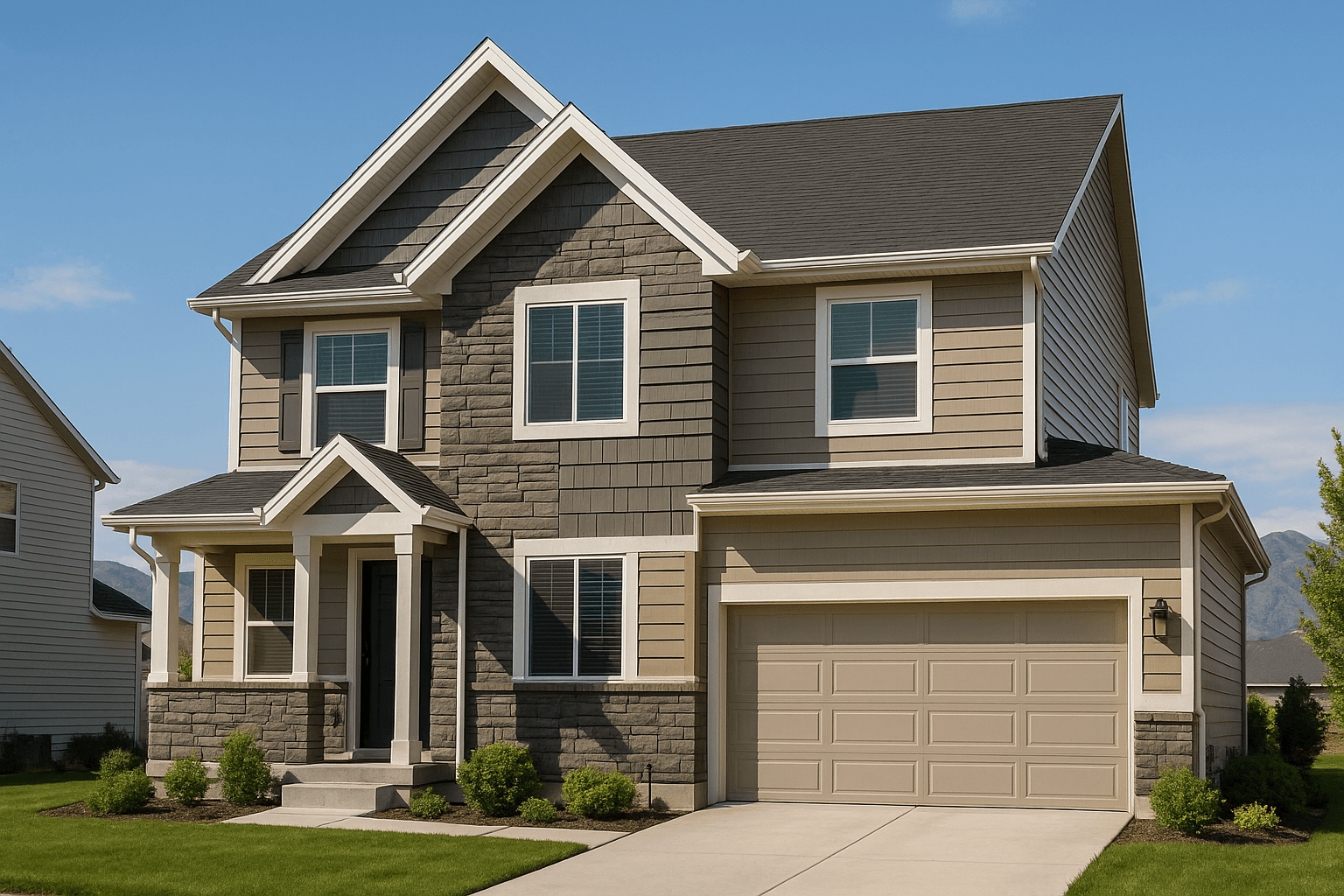
Cedar-look shingles on gables, dormers, or porches add warmth and texture without overwhelming the façade. We often use James Hardie shingle panels for that natural look with stronger weather resistance. It’s a small move that makes the front elevation feel finished.
Modern looks with clean lines
Vertical panels and reveals
For a contemporary style, vertical panels with tight seams and intentional reveals create a sleek face. Pair a deep charcoal with warm wood-look trim for balance. Clean lines let the architecture do the talking; the siding becomes a frame, not a distraction.
Mixed materials done right
Mixing textures is popular in Salt Lake City because it mirrors our landscape. Smooth panel next to wood-look lap, a bit of stone at the base, and metal accents around the entry can feel fresh but grounded. The trick is proportion. We map it out with 3D previews so the balance feels right from the street, not just on paper.
Materials matter more than you think
Style is the face; materials are the backbone. Here’s how the most common options stack up for our climate.
Fiber cement like James Hardie: Excellent UV stability, crisp edges, and strong fire resistance. It’s a favorite across the valley for both homes and commercial projects. Colors hold well with ColorPlus finishes, and trim profiles are extensive. Heavier than vinyl; installed with proper flashing and a moisture management layer for long-term performance.
Vinyl siding: Cost-effective and lighter weight with lots of colors and profiles. Insulated vinyl can add a bit of R-value and stiffen the panel. Modern vinyl has better fade resistance than older products. It’s a solid choice for budget-friendly refreshes and multifamily buildings, especially if you choose a thicker panel and quality trim accessories.
Engineered wood like LP SmartSide: Real-wood look with modern resins and treatments that resist moisture and impact. Flexible for board and batten, lap, and trim. Great for homeowners wanting a warm, natural aesthetic without constant upkeep.
Metal accents: Aluminum or steel panels can be striking on modern façades. Usually best as an accent rather than the whole exterior. Powder-coated finishes help with color life, and the clean lines are hard to beat.
Stucco and stone veneer: Not siding in the strict sense, but common companions in Utah. Stone at the base with fiber cement above is a classic. Modern light stucco with dark fiber cement trim is another strong pairing for offices and retail fronts along State Street and Highland Drive.
Color that fits our light, our mountains, and your style
Salt Lake’s light is bright and crisp at altitude. Dark colors look bolder here. Lighter colors can feel sunnier than you expect. We usually test a few samples on the south and west sides because those walls see the most UV. Earth tones, soft sage, weathered grays, and deep charcoals echo the Wasatch. Classic white with black windows still turns heads; warm taupes feel friendly and timeless.
For businesses, neutrals with a high-contrast accent create a clear brand statement without shouting. Think warm gray panels with a cedar-look entry surround and clean white trim. Honestly, small color choices have an outsized impact on how your building feels at street level.
Match style to home or business type
You know what? It helps to see pairings that work again and again. Here are reliable combos we install across the valley.
| Property Type | Recommended Style | Why It Works |
|---|---|---|
| Brick bungalow or cottage | Lap siding with shingle gables | Respects the era while adding texture and fresh color. |
| Ranch or split-level | Horizontal lap with board and batten accents | Horizontal lines calm long elevations; vertical sections add height. |
| Modern infill or townhome | Vertical panels, mixed materials | Clean geometry, strong shadows, bold curb appeal. |
| Office or retail | Fiber cement panels with wood-look accents | Durable, low maintenance, and brand friendly. |
The small details that carry the whole look
Trim width changes everything. A 4-inch trim feels delicate. A 6-inch trim reads bold. Corners, window surrounds, soffits, and frieze boards all work together to define the style. Reveal lines on modern panels must be consistent. Shingle edges should stagger with intent. These choices seem minor until you stand back on the sidewalk; then you see how the whole façade comes together.
We also plan where to break materials. For example, wrapping stone cleanly around a porch but stopping it short of the garage can save cost and keep the look balanced. Let me explain: continuous textures feel heavier. Breaking them at natural edges lets the architecture breathe.
Energy, moisture, and the stuff you don’t see
Behind the style is a system. A quality weather-resistive barrier, proper flashing, and smart ventilation keep walls dry through winter thaw and summer storms. For north-facing walls near the canyons, we sometimes add a rainscreen space to help moisture escape. It’s invisible from the street but pays off in longevity.
Insulated vinyl siding can reduce drafts and tighten a budget. Fiber cement siding over a well-detailed substrate delivers the longest service life for many homes around Salt Lake City. If you’re near wildland edges, fiber cement’s fire resistance is a strong advantage.
Budget ranges and value without guesswork
Every project is unique, but ballpark numbers help you plan. Basic vinyl siding in common profiles tends to be the most budget friendly. James Hardie fiber cement usually lands in the mid range. Engineered wood and mixed-material façades can be mid to higher, depending on trim and accents. Stone veneer, metal features, and complex elevations add cost because they add time and detail.
Here’s the thing: curb appeal has real value. Fresh siding often improves appraisal numbers, but more importantly, it changes how a home or storefront feels when you arrive. That emotional lift is part of the return, even if it doesn’t show up line by line on a spreadsheet.
How we help you choose with confidence
Our process keeps things simple and visual. We start with a quick conversation about style, maintenance goals, and budget. Then we measure, check the current wall layers, and talk through any HOA notes. Next, we build clear design options. We use photo renderings and 3D previews, so you can see lap versus board and batten, or charcoal versus slate, on your actual place. We bring real samples, not just brochures, because color shifts in real light.
When you’re ready, we schedule, protect landscaping, manage permits, and keep a tidy site. Communication matters to us, so you’ll know who’s on site and what’s next. If a storm rolls in, we secure things and adjust the plan rather than pushing through and risking quality.
Seasonal timing in Salt Lake City
Winter installs are possible with the right materials and planning, but paint-related work sometimes waits for warmer days. Spring fills fast, especially after big snow years when everyone is ready to freshen up. Late summer and early fall can be a sweet spot for many projects. If you have a business that needs minimal downtime, we can phase work or schedule off-hours to keep you open.
A quick checklist to narrow your style
Use this as a five-minute filter before we meet. It helps us get you to the right look faster.
- Do you want bold or calm? Deep color with contrast, or softer tones that blend with the landscape.
- Horizontal or vertical lines? Horizontal reads classic; vertical feels modern or farmhouse.
- One texture or mixed? Single material for simplicity, or a second accent for depth.
- How hands-off are you? Low-maintenance materials like fiber cement keep upkeep small.
- Any HOA or brand rules? Bring them; we’ll work within the lines without losing style.
Quick answers to questions we hear a lot
Will dark colors fade faster here? With quality finishes, not by much. Brands like James Hardie ColorPlus and premium vinyl lines are built for UV. We still test samples on sunny walls to be sure.
Can I mix siding with existing brick? Absolutely. Horizontal lap over brick is a classic. For modern styles, vertical panels with a slim trim can pair well with mid-century brick too.
How long does a typical project take? Many homes run one to two weeks, depending on size, trim detail, and weather. Commercial timelines vary with phasing and access.
What about warranties? Material warranties vary by brand. Our workmanship warranty backs the install. We walk you through both so there are no surprises.
Bring your style to life with Utah Siding & Exteriors
Whether you’re giving a Sugar House bungalow fresh charm or setting a modern tone for your storefront in Central Ninth, we’ll help you choose a look that fits and lasts. Call Utah Siding & Exteriors at 801-509-9241 and talk to a real person about your project. Or click Request a Free Quote and we’ll get you quick ideas, clear pricing, and sample options that match your style. Let’s make your exterior feel like you, and make it stand up to our Utah weather with confidence.