Your siding takes a beating here along the Wasatch Front. Sun at 4,300 feet. Spring wind that feels like it rolls right out of the canyon. Sudden temperature swings and the occasional summer hailburst that makes everybody step to the window. If your vinyl has a crack, a rattle, or a wave that wasn’t there last fall, you’re not imagining it. This guide from Utah Siding & Exteriors walks homeowners and businesses in Salt Lake City through smart, simple ways to handle Vinyl Siding repair and full-on vinyl Siding Replacement—without guesswork, without drama.
So, what actually fails on vinyl siding in Salt Lake City?
Let me explain. Altitude means stronger UV. Stronger UV means color fade and chalking sooner than you’d expect. Add freeze–thaw cycles, sprinkler overspray, and those sneaky grill flare-ups that soften panels, and you’ve got the usual suspects for damage.
Here’s what we see most from Sugar House to South Salt Lake to the benches in Sandy:
- Cracks and chips from hail, rocks from mowers, or a stray lacrosse ball.
- Warping and wavy courses from heat or overdriven nails that don’t let panels move.
- Loose, rattling panels thanks to high winds or missing starter strips.
- Chalking and fading from UV oxidation—your hand gets powdery after you rub the wall.
- Stains and mildew where water sits, like behind bushes or near leaky downspouts.
None of these are a panic by themselves. But a small gap or broken lock can let water blow past the panel. That’s when sheathing and framing get unhappy. You know what? Catching it early is cheaper than ignoring it.
Repair or replace? A clear way to decide
Here’s the thing: both paths work. The trick is choosing the one that solves the real problem, not just the visible crack.
When repair makes solid sense
- Localized damage: A few cracked panels, a single melted spot near the grill, one wind-peeled course.
- Sound structure: Sheathing is dry, housewrap is intact, and you don’t see swelling around windows.
- Decent color match: Your siding is newer, or we can source matching profile and shade from brands like Mastic, CertainTeed, Royal, or Ply Gem.
Repair is fast and kind to the budget. It keeps your exterior looking cared-for and watertight.
When replacement is the smarter play
- Widespread issues: Multiple elevations are faded, brittle, or wavy, or locks are breaking row after row.
- Hidden moisture: Soft sheathing, warped trim, or musty smells near walls—moisture has been sneaking in.
- Big upgrades: You want better insulation, impact resistance, and color that holds longer in our high UV.
It sounds funny, but replacing more can cost less over time. You fix the envelope, improve energy feel, and stop the constant patchwork. We’ll walk you through both choices, step by step. No pressure.
The anatomy of a solid vinyl siding repair
Professional crews use simple tools, careful steps, and a few rules that keep panels moving the way they should.
Essential tools we bring (and you can, too if you’re handy): Malco zip tool (siding unlock tool), snap-lock punch, tin snips, a sharp utility knife, level, and corrosion-resistant nails with wide heads.
Key steps we follow on every siding repair Salt Lake City job:
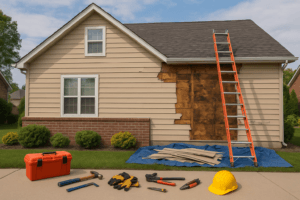
- Inspect beyond the crack: We check the course above and below, plus trim and corner posts. If locks are stretched or brittle, we widen the repair zone.
- Unlock, don’t pry: Using a zip tool, we unhook the bottom of the panel above. Forcing the lock is how people create more damage than they started with.
- Replace or re‑seat nails: Nails should be centered in the slot, not tight—leave a hair of play so the panel floats. Think credit-card space. Hammer heads should “kiss,” not clamp.
- Leave end gaps: We keep 1/4 inch at ends for expansion (3/8 inch in hot weather). Then we re-lock the course and test the float by sliding the panel side to side.
- Do not caulk laps: Vinyl needs to move. Caulking overlaps traps water and guarantees buckling later.
- Reinforce weak spots: Around hose bibs, grill areas, or kids’ play zones, we add discreet backer or switch to impact panels where it pays off.
Safety note: Ladders on sloped yards and high wind are a bad mix. We schedule work when gusts calm down and secure access like it matters—because it does.
Professional touches that stop repeat problems
Anyone can pop in a panel. The real fix looks past the cosmetic bit.
- Weather barrier first: We check the housewrap or rigid foam for tears and tape seams cleanly. Flashing at windows and doors gets a quick audit, then tuned where needed.
- Starter and J‑channels: If the starter strip or J is bowed, nothing lays flat. We straighten these lines so the siding runs true.
- Vent and dryer heat: Melted panels often point to dryer vents or grills. We add heat diverters or reposition equipment. Quick change, big win.
- Water control: Downspouts, splash blocks, and grade—if water drains wrong, siding suffers. We’ll flag it and fix it if you want.
This is where a small repair can actually upgrade your exterior system. Not a bad two-for-one.
Color and profile matching, without the headache
Matching vinyl can be easy or, well, not. Sunlight shifts colors, and older profiles go out of production. We keep a reference library and work with suppliers across the valley.
Profiles we source all the time: Dutch lap, clapboard, board‑and‑batten, and shake accents. If we can’t match exactly, we’ll suggest a smart transition—like replacing a whole elevation or creating a framed accent that looks intentional.
What about painting vinyl? Yes, with vinyl-safe paints and lighter colors. Sherwin-Williams VinylSafe is a common choice. But painted vinyl runs hotter and can void panel warranties. For most folks, color‑matched replacement panels or a planned re‑side with vinyl Siding Installation in a fresh, UV‑tough line is the better call.
Costs, timelines, and what to expect
We like plain numbers with local context. Your home or building may vary, but these ranges hold steady across Salt Lake County.
| Scenario | Typical Cost in SLC | Typical Timeline |
|---|---|---|
| Localized vinyl siding repair (few panels) | $200–$800 per affected area | 1–3 hours |
| Sectional replacement (one elevation) | $7–$11 per sq ft installed | 1–2 days |
| Full vinyl siding replacement | $9,500–$28,000+ depending on size and line | 3–7 days |
Disruption is minimal. We protect landscaping, mind parking, and keep a tidy site. On multi-day projects, we button up each night so you’re not staring at a half-done wall when the evening breeze kicks in.
Warranty? We register manufacturer warranties when we replace large areas, and our workmanship warranty covers the detail work. Good work should age well—especially in our climate.
Notes for businesses and multifamily managers
Commercial storefronts and apartment communities have a different rhythm. We get it. Tenants, deliveries, quiet hours—lots of moving parts.
- Scheduling by stack: We move elevation by elevation so tenants always have a clear path.
- Lift and safety plans: We coordinate permits for boom lifts and follow OSHA fall protection. No shortcuts.
- Material continuity: We source consistent lots so long elevations don’t “stripe” with shade changes.
- Insurance and docs: COI, W‑9, vendor onboarding—handled. Need photo logs? We deliver running reports.
If storm damage triggers an insurance claim, we document fast. Photos, measurements, and line-item scopes that make adjusters happy and move the file forward.
Seasonal care checklist for long‑lasting vinyl
Vinyl is low maintenance, not no maintenance. A little care goes a long way.
- Gentle wash in spring: Soft brush, garden hose, mild cleaner like Simple Green or oxygen bleach. Rinse top to bottom. Avoid blasting water upward at laps.
- Mind the grill: Keep heat 2–3 feet away. Vinyl softens before you see it. We’ve replaced more “grill ghosts” than we can count.
- Trim shrubs: Branches rub finish, trap moisture, and invite wasps near J‑channels.
- Check after big wind: Look for loose corners and fluttering courses, especially on west and south walls.
- Watch sprinklers: Overspray stains and keeps walls wet. A small head adjustment saves headaches.
If you see a new wave or hear a rattle on breezy nights, call early. Small fixes stay small when you jump on them.
Permits, codes, and insurance: local tips
Salt Lake City and nearby municipalities may require a permit for larger siding replacement. For straightforward repairs, permits usually aren’t needed. Rules change, so we check with the city’s Building Services before big scopes and handle the paperwork when we manage your project.
Wind and fire separation clearances around vents and meters matter. So does egress at multi‑unit buildings while work is underway. We build those into the plan so there are no surprises during inspection.
For hail and wind claims, document early. Take a few photos, note the date and storm, then call your insurer. We can meet the adjuster on site and speak their language—line items, waste factors, and comparable materials—so your exterior gets restored correctly, not just quickly.
Why homeowners and businesses trust Utah Siding & Exteriors
We’re local. We know the winter inversions, the July UV, and the way canyon winds tug at west-facing walls. That local know‑how shows up in small details: nail tension, end gaps, straighter courses, cleaner flashing. It also shows up in how we treat your place—like it’s ours.
What you get with our crew:
- Clear diagnosis: A photo‑rich inspection that shows root cause, not just symptoms.
- Straight talk: If a repair will hold, we’ll say so. If replacement pays you back, we’ll show you why.
- Quality materials: Lines from Mastic, CertainTeed, Royal, Ply Gem, and TruExterior accents where it makes sense.
- Clean site, happy neighbors: We show up when we say, protect what matters, and leave it tidy.
Whether it’s a tidy vinyl siding repair on a bungalow in Rose Park or a phased vinyl siding replacement across a busy retail strip in Murray, we tailor the plan and keep you in the loop.
Ready to shore up your exterior?
If your siding is rattling in the wind, if a grill mishap left a ripple, or if you’re eyeing a full refresh, we’re here to help. Call Utah Siding & Exteriors at 801-509-9241 and talk with a real person about your home or building. Prefer a digital start? Click the button below to Request a Free Quote. We’ll bring the ladders, the know‑how, and a plan that fits your goals—and your timeline.