
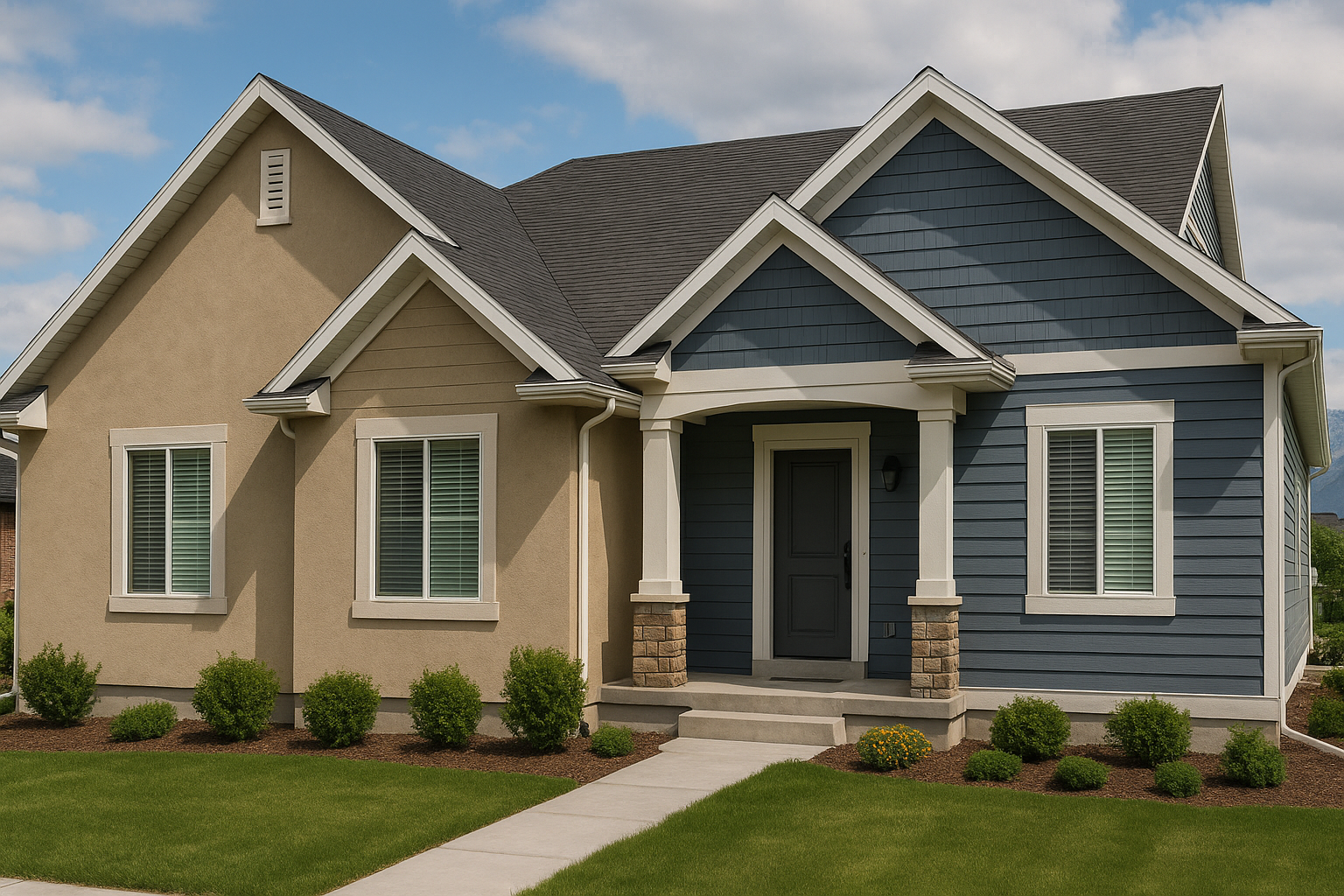
If your heating or cooling bill jumps with every storm that rolls off the Wasatch, you’re not imagining it. Stucco looks timeless on a Salt Lake City home or storefront, but it’s not always the most efficient shell against our freeze–thaw winters, high-elevation sun, and gusty canyon winds. Replacing stucco with a well-detailed siding system can tighten the building envelope, add real insulation value, and keep indoor temps steadier year-round. That’s true for bungalows in Sugar House and warehouses near the airport. Let’s talk about why, and how to do it right without losing the look you love.
So why does stucco struggle on the Wasatch Front?
Stucco has charm. It’s solid and quiet. But as a thermal layer, it’s thin. Traditional three-coat stucco has very low R-value. It doesn’t insulate much by itself, and it can develop hairline cracks from UV exposure, seismic shimmy, and everyday settling. In our climate, those tiny cracks let in moisture. Come January, that moisture freezes and expands. The cycle repeats, and efficiency drops as drafts find pathways in.
Add our elevation and sun angle and you get another issue: rapid heating and cooling. Materials expand and contract day to night, especially on south and west walls. Stucco handles a lot, but frequent movement creates stress on rigid finishes. Once you’ve got micro-cracks and weak air sealing, your furnace or AC works harder.
Finally, stucco makes drainage tricky. If water gets behind it from a window leak, sprinkler overspray, or wind-driven rain, there’s not always a clean escape route. Trapped moisture means cold spots and the kind of clammy wall you feel on a winter morning. That’s not great for comfort or energy use.
How modern siding systems boost efficiency
Here’s the thing: siding isn’t just “the skin.” Today’s siding systems are a stack of smart layers that manage heat, air, and water. When you Replace Stucco with siding, you get the chance to rebuild that stack the right way.
- Continuous exterior insulation: A layer of rigid foam (EPS, XPS, or polyiso) over the sheathing cuts thermal bridging through studs. That’s where big heat loss happens. A 1-inch polyiso panel can add roughly R-6; 1.5 inches gets you near R-9. That’s real-world comfort you can feel.
- Air sealing and housewrap: High-quality wraps like Tyvek or Typar, taped seams, and smart flashing keep wind from slipping in through outlets and baseboards. Less infiltration means a steadier thermostat.
- Rainscreen gap: A tiny air space behind the siding (created with furring strips or a ventilated mat) lets walls dry from both sides. In our shoulder seasons, that drying capacity matters.
- Insulated siding options: Insulated siding like foam-backed vinyl adds another R-2 to R-2.7 on the cladding itself and helps flatten older walls.
Material choices? Plenty.
Fiber cement from brands like James Hardie is a favorite in Salt Lake City for its durability and clean, modern lines. On its own, it’s not insulation; paired with continuous exterior insulation, it becomes a tough, efficient system with great fire resistance.
Engineered wood such as LP SmartSide offers the warmth of wood grain with smart resins that handle our dry climate and sudden storms. It’s lighter than fiber cement, which can help on second-story retrofits.
Premium vinyl from brands like Mastic or Alside has improved a lot. Foam-backed profiles feel more solid, resist sagging, and can make financial sense for rentals or large commercial façades.
Metal? For certain commercial applications, high-quality steel or aluminum panels can be efficient and tough, especially when installed over foam and a ventilated cavity. And they look sharp on a mountain-modern build.
The numbers you can feel on your bill
Let me explain why this adds up. Salt Lake City sees roughly 5,000–5,500 heating degree days each year and a healthy spike of sunny, hot afternoons from June through September. Leaky walls bleed heat in winter and let that hot, dry canyon wind push in during summer.
By rebuilding your wall with sealed sheathing, taped housewrap, a rainscreen, and 1–1.5 inches of exterior foam, many homeowners and small businesses see:
- 10–20 percent lower energy use compared to tired stucco with gaps and weak flashing. Actual savings vary, of course, but that’s a common range reported in DOE and ENERGY STAR case studies for envelope upgrades.
- More even room temps—fewer hot-cold swings near exterior walls, which often matters more than the raw dollars saved.
- Quieter interiors thanks to the added layers and air gap.
What about payback? It depends on the project’s scope and material. When you’re already re-skinning the exterior for maintenance or curb appeal, adding foam and air sealing is usually the most cost-effective time to boost energy efficiency.
Homeowners vs. businesses: different goals, same comfort
Homeowners in neighborhoods from The Avenues to Daybreak often focus on comfort, curb appeal, and resale value. Businesses along State Street or in South Salt Lake look at utility spend, brand image, and downtime.
For commercial façades, we can stage the work so your doors stay open. Many owners pair new siding with LED lighting and a signage refresh—small changes that make a huge visual impact from 700 East to Redwood Road. On multifamily properties, insulated assemblies help stabilize tenant comfort and reduce the calls about “drafty rooms.” You know what? That alone is worth a lot to a property manager.
Myths, half-truths, and what actually matters
- “Stucco breathes better.” Breathability is about the whole wall, not just the face. A modern, ventilated rainscreen behind siding dries faster than most older stucco walls.
- “Siding can’t handle Utah sun.” High-quality, UV-stable finishes do. We choose colors and products rated for high elevation so they don’t chalk or fade fast.
- “Insulated walls trap moisture.” Not when detailed correctly. We use proper flashing, drainage planes, and a ventilated gap so moisture moves out, not in.
- “Fire resistance will suffer.” Fiber cement and certain metals offer excellent fire performance. For foothill homes with brush nearby, that’s a smart pick.
The makeover, step by step
Every building is different, but here’s a typical flow when you replace stucco with siding in Salt Lake City.
- Assessment and planning: We inspect the stucco, check for bulges or soft spots, scan for moisture, and talk through styles and budgets. If you want, we can coordinate with an independent energy auditor for a blower-door test before and after.
- Selective demo: Full removal or strategic sections—depends on the substrate and condition. We fix sheathing issues now, not later.
- Flashing and housewrap: Pan flash windows, tape seams, and wrap corners cleanly. Products like Tyvek or Typar create a continuous air and water barrier.
- Exterior foam insulation: Rigid panels from Owens Corning (Foamular) or Kingspan go on next. We stagger seams and seal penetrations around lights, hose bibs, and vents.
- Rainscreen: Furring strips or a ventilated mat create that narrow, essential gap.
- Siding install: Fiber cement, engineered wood, or insulated vinyl—installed to manufacturer specs for our local wind exposure and seismic considerations.
- Trim and details: Corners, frieze boards, soffits, and caulking. The small stuff keeps the big system tight.
- Final touch and haul away: We tidy up, walk the site with you, and review maintenance basics.
It sounds like a lot, but the rhythm is steady. Many single-family homes wrap up in a couple weeks, weather permitting.
Design without the do-over: styles that fit SLC
You don’t have to lose character to gain efficiency. Lap profiles bring classic look to Federal Heights homes. Board-and-batten suits that mountain-modern vibe in Holladay. We can pair smooth fiber cement with cedar-look accents under a gable for a balanced feel. And color? Earthy taupes, cool grays, even bold blues. We’ll steer you to coatings that shrug off high-altitude sun and look great through snow season and spring rains.
HOA? We’re used to submittals. We’ll help with samples, color boards, and spec sheets so the approval process stays smooth.
Costs, rebates, and smart financing
Honest talk on cost: full removal of stucco and rebuild with foam and new siding is a bigger project than a simple repaint. Price varies by material, foam thickness, and details like trim complexity and window condition. The reason many owners say yes anyway? You address maintenance, improve comfort, and refresh curb appeal all at once.
Rebates in Utah tend to focus on attic insulation, HVAC, and windows. Still, adding continuous exterior insulation may qualify as a home energy improvement under federal tax credits for insulation and air sealing. Programs change often, so check current IRS guidance and talk to your tax professional. We’re happy to provide product data and invoices that make documentation easier.
Financing options are available for qualified customers. For businesses, we can phase work by elevation to spread cost and reduce disruption.
Maintenance and longevity: less fuss, more “set it and forget it”
Stucco patching can turn into a game of whack-a-mole. With modern siding systems, maintenance is lighter:
- Fiber cement: Factory finishes often carry 15-year color warranties; repaint cycles typically 12–15 years depending on exposure.
- Engineered wood: Durable coatings and easy touch-ups keep panels fresh.
- Vinyl and insulated vinyl: No painting; an annual rinse usually does it.
Either way, the backbone—housewrap, foam, and flashing—does the heavy lifting for comfort. And yes, we register manufacturer warranties so everything’s documented.
Local quirks we plan for: sun, snow, wind, and a little shake
Salt Lake City’s climate keeps contractors honest. We choose fasteners for wind exposure near East Bench gusts. We flash windows for sideways rain that shows up with summer storms. We space and caulk for our seismic zone because little movements happen all the time. We also think about ice dams on north eaves and high-UV fade on west walls. Details matter here, and we’ve learned them job by job.
Quick look: stucco vs. siding for energy efficiency
| Feature | Traditional Stucco | Siding System with Foam |
|---|---|---|
| Insulation Value | Very low R on its own | +R-3 to R-9 with foam layer |
| Air Sealing | Can crack over time | Sealed wrap + taped seams |
| Moisture Management | Drainage is limited | Ventilated rainscreen dries fast |
| UV and Color | Fading/hairline cracks possible | UV-stable finishes, replaceable panels |
| Design Flexibility | Classic textures | Laps, battens, shakes, panels |
Wait—when does stucco still make sense?
We’ll say it: sometimes keeping stucco is fine. If your walls are sound, you’ve got good overhangs, and the look is central to your home’s character, we might recommend targeted repairs plus attic and duct upgrades first. But if you’re facing recurring cracks, moisture stains, or rising bills, pairing new siding with foam and air sealing is usually the cleaner fix—with beauty points as a bonus.
Why Utah Siding & Exteriors for Salt Lake City projects
We live and work here. We know how a cottonwood seed can clog a weep channel and how a brief April blizzard can test flashing. Our team balances craftsmanship with building science, so your place looks sharp and performs like it should.
- Local, code-smart installs: Built for SLC wind, UV, and freeze–thaw. We follow manufacturer specs to keep warranties intact.
- Material expertise: James Hardie, LP SmartSide, insulated vinyl, metals—matched to your goals.
- Energy-minded detailing: Proper continuous exterior insulation, taped wraps, and ventilated rainscreen assemblies.
- Clean jobsites: We protect landscaping, manage debris, and respect neighbors. Simple, but it matters.
Ready to make your building quieter, cozier, and cheaper to heat?
If you’re considering a switch from stucco, let’s map a plan that fits your place and your budget. Call Utah Siding & Exteriors at 801-509-9241 or click Request a Free Quote. We’ll share samples, walk you through options, and give you straight pricing. No pressure—just clear answers and a path to a better-performing home or business in Salt Lake City.