
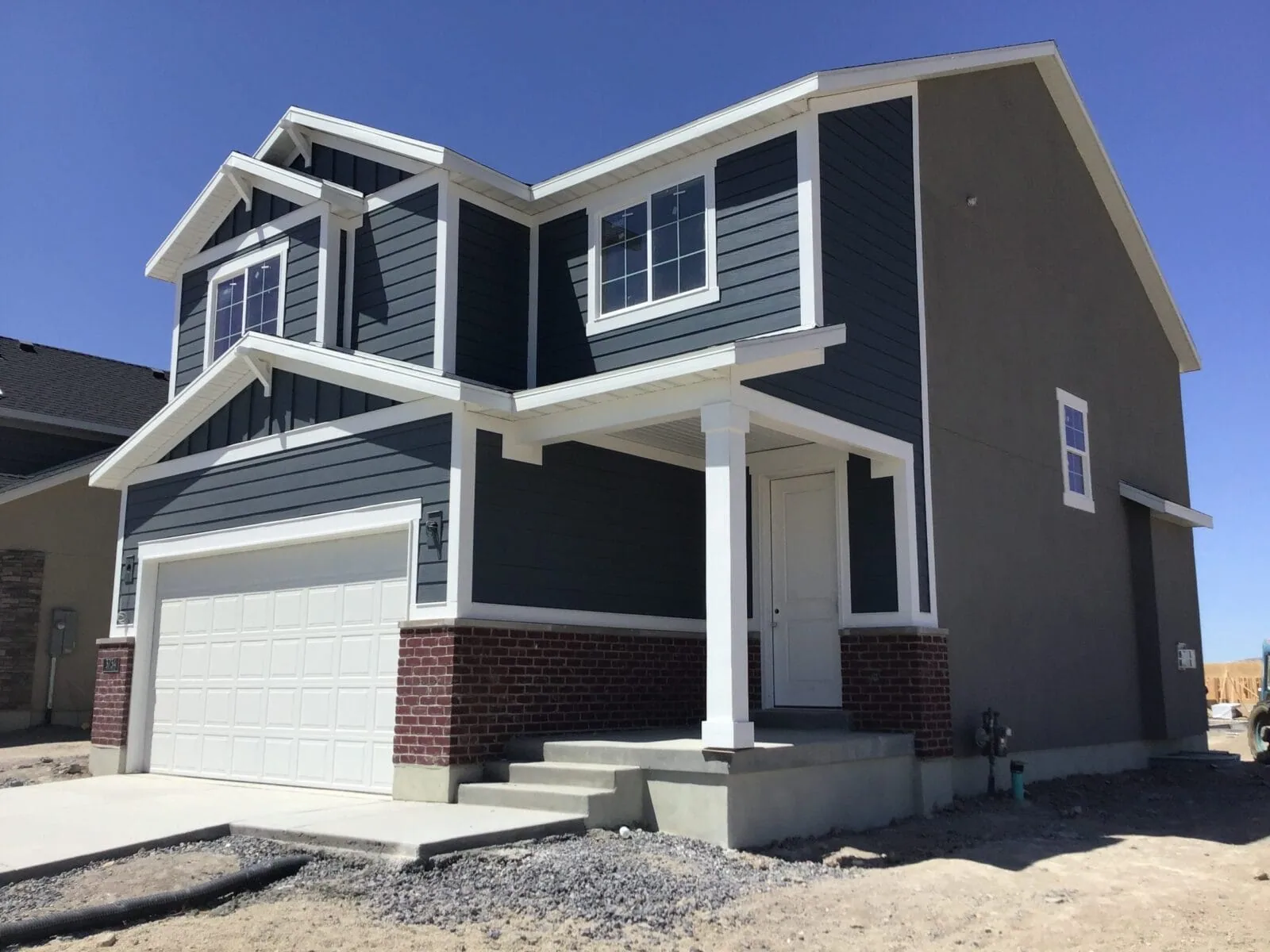
Siding Maintenance in Utah: A Material-by-Material Planning Checklist
A useful siding maintenance plan begins with the actual material and finish on your home. Fiber cement, engineered wood, vinyl, aluminum, steel, and natural wood should not all receive the same cleaning, painting, or repair advice.
Keep the product identity, installer information, and current manufacturer care instructions with your project records. General guidance cannot replace instructions for the installed system.
Look at the wall as a system.
During a routine visual check from a safe location, look at siding, corners, trim, openings, penetrations, and the areas near roof intersections. Loose components, new cracks, staining, damaged finishes, or recurring symptoms deserve a closer conversation.
Gutters and downspouts also affect the conditions around the exterior. Repeated overflow or water directed against the wall should not be treated solely as a cosmetic siding-cleaning issue.
Fiber cement and James Hardie.
Use the manufacturer’s care guidance for the selected product and finish. A field-painted system and a factory finish may have different maintenance considerations. Inspect specified joints, flashing, clearances, and finish condition without disturbing the assembly.
Do not assume that a general claim of durability means no maintenance, unlimited pressure washing, or permission to use any cleaning chemical. Check the actual instructions before choosing a method.
Engineered wood and LP SmartSide.
Know whether the installed product was primed or factory-prefinished, and keep the applicable finish information. Exposed edges and damaged coatings need the correct product-specific attention.
LP’s published finishing guidance calls for approved paint on exposed edges and cautions against back-priming its siding and trim. That is not a general instruction for every solid-wood or composite product. Use the current manual for the installed material.
Vinyl siding.
Inspect for loose panels, damaged accessories, distortion, or problems near openings. Vinyl installation must allow the material to move; do not improvise a repair by fastening a panel rigidly in a way that conflicts with its instructions.
Before cleaning, check the manufacturer’s accepted methods and products. For a damaged panel, matching the profile and weathered color may need assessment before a small repair is promised.
Aluminum and steel.
Identify the metal and finish rather than treating all metal siding as one product. Dents, damaged coatings, loose components, and changes around penetrations may need different responses.
Coatings, touch-up methods, cleaning products, and cut-edge treatment are system-specific. Do not apply one steel product’s care guidance to an unrelated aluminum system, or infer a finish warranty from a material name.
Natural wood.
Species, profile, exposure, and finish all affect care. A deliberately weathered appearance and a consistently coated appearance involve different expectations. Inspect finish condition and transitions using the selected product’s guidance.
Wood siding and engineered wood are different categories. Avoid transferring paint, priming, or maintenance instructions between them without checking the actual material.
A practical visual-check list.
- New cracks, missing panels, loose corners, or damaged trim.
- Stains or repeated wet areas near openings and roof intersections.
- Changes in finish condition, exposed edges, or peeling coatings.
- Blocked or poorly directed drainage around the wall.
- Damage after an impact or other known event.
- Symptoms that return after an earlier repair.
Do not climb onto an unsafe roof or remove cladding simply to investigate. Photograph the affected elevation and a close-up from a safe position, then describe what changed.
Utah exposure is property-specific.
Utah’s climate varies with geography and elevation. Snow, freezing conditions, rainfall, sun exposure, and site access can all matter even in a broadly arid region. The right maintenance approach still depends on the installed product, finish, and actual exposure.
When a repair is being considered, the material’s age, matching availability, and surrounding wall condition can change whether a localized repair or a broader replacement is appropriate.
When to ask for help.
If damage recurs, material is loose, water is appearing inside, or the cause is unclear, request an assessment rather than treating a new coating as a diagnosis. Explore siding repair considerations or tell us about the project.
Official reference starting points.
Keep planning your exterior
Your home. A more beautiful exterior.
Tell us what you have in mind. Start with a free on-site estimate.